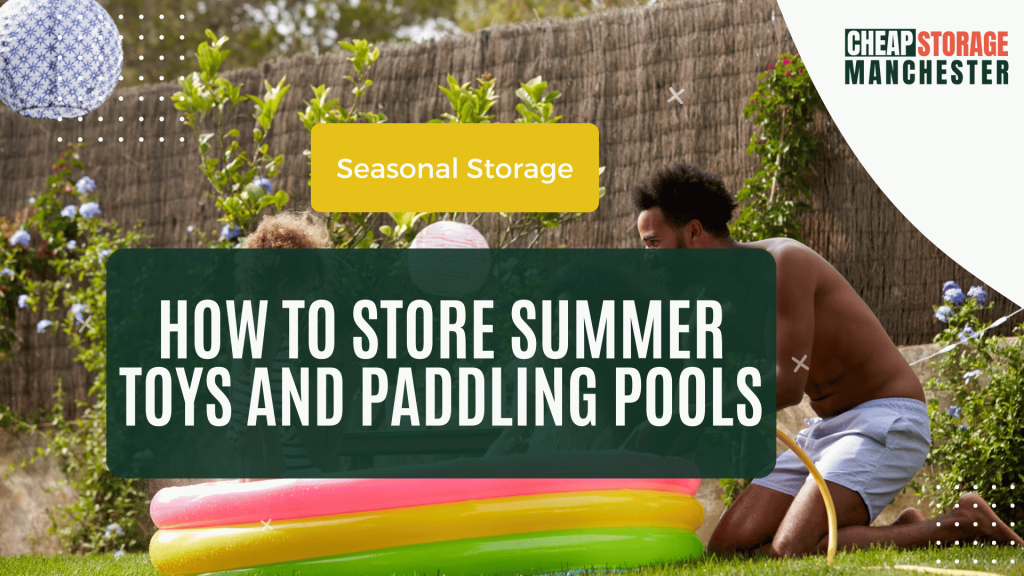
In Manchester, we learn to make the most of every sunny interval. When the temperature rises, the paddling pools come out, the garden slides are assembled, and the lawn becomes a graveyard for inflatable flamingos and footballs. However, as the inevitable autumn drizzle arrives, these bulky items quickly transform from sources of joy into significant storage headaches.
Leaving outdoor gear exposed to the Manchester winter is a recipe for disaster. Frost can make plastics brittle, while the constant dampness leads to stubborn black mould that is almost impossible to scrub off. Learning how to store summer toys and paddling pools properly is essential to protect your investment and keep your garden or garage from becoming an impassable obstacle course.
By following a structured cleaning and packing routine, you can ensure that your equipment remains in “like-new” condition for next year, while reclaiming the space you need for winter hobbies or home improvements.
Step 1: The Essential Clean and Dry Phase
The biggest mistake homeowners make is folding away garden items while they are still slightly damp. Moisture trapped in the folds of a paddling pool will lead to mould growth within weeks, which can rot the material and create a permanent, unpleasant smell.
Deep Cleaning Inflatables
Start by draining your paddling pool and scrubbing it with a mixture of mild dish soap and warm water. Avoid harsh chemicals or bleach, as these can degrade the PVC or plastic over time. Pay close attention to the seams and the underside, which often accumulates grass, mud, and insects.
The Drying Process
In the North West, “air drying” can be a slow process. After hosing down your toys, use a clean towel to manually dry every surface. For larger pools, leave them draped over a garden chair in a breezy spot for at least 48 hours. If you are struggling for space during this messy transition, decluttering your patio area beforehand will make the job much easier.
Step 2: How to Store Summer Toys and Paddling Pools Correctly
Once everything is bone-dry, the way you pack it away will determine whether it survives the winter or ends up in a skip next May.
The Cornstarch Trick
Before you fold your inflatable pool or garden toys, sprinkle a light layer of cornstarch or talcum powder over the surfaces. This prevents the plastic from sticking to itself (a process known as “blocking”), which can cause the material to tear or peel when you try to inflate it next summer.
Strategic Folding
Avoid sharp creases. Instead of folding your pool into a tight square, try to roll it loosely. This reduces the stress on the seams. For hard plastic toys like slides or playhouses, disassembly is usually the best route. If you’ve lost the original instructions, take photos as you take it apart to make next year’s “build day” stress-free.
Essential Packing List:
- Heavy-duty plastic bins: Use these instead of cardboard boxes, which can soften in a damp garage.
- Original packaging: If you still have the box, it’s usually the most space-efficient way to store the item.
- Labelling: Mark bins clearly as “Garden Summer Gear” so they don’t get buried under winter sports equipment.
Step 3: Protecting Electronics and Outdoor Games
Modern garden toys often come with battery-operated water pumps, lights, or sound effects. These require special care before being put into home storage.
Battery Maintenance
Always remove batteries from any outdoor toys. Over the winter, cold temperatures can cause batteries to leak, leading to corrosion that will permanently ruin the toy’s circuitry. Store the batteries in a cool, dry place inside the house, or simply dispose of old ones and buy fresh sets next year.
Small Toy Organisation
For buckets, spades, and sandpit toys, use mesh bags. This allows any remaining sand or moisture to fall away rather than sitting at the bottom of a sealed box. Keeping these smaller items together prevents them from being lost during life events like moving house or rearranging the garage.
Step 4: Finding the Right Storage Environment
Where you choose to keep your gear is just as important as how you pack it. Manchester gardens often have small sheds that are prone to leaks, and many modern homes have limited loft space.
The Problem with Sheds and Garages
Unheated sheds are often damp and can be prime real estate for mice looking for a winter nest. Soft plastics and rubber are favourite nesting materials for rodents. If you must use a shed, ensure your items are in lidded, bite-proof plastic containers.
Reclaiming Your Space with Self Storage
If your garage is so full of summer gear that you can’t get to your tool storage or park your car, it may be time to consider a professional solution. Moving bulky, seasonal items into a dedicated unit keeps them in a dry, climate-controlled environment.
Many families in Manchester find that a small storage unit is the perfect “overflow” for the winter. With no deposit required and offers like 50% off your first 9 weeks, it is an affordable way to protect your garden investments.
Summary of Best Practices
To successfully navigate the transition from summer fun to winter order, keep these key points in mind:
- Clean and Sanitize: Remove algae and dirt to prevent permanent staining.
- Total Dryness: Even a teaspoon of water can cause a mould outbreak.
- Powder the Plastic: Use cornstarch to stop inflatables from sticking together.
- Disassemble: Take apart large frames to save space and prevent warping.
- Pest Proofing: Use hard plastic lidded bins rather than bin bags or cardboard.
- Off-site Options: Consider furniture storage facilities for oversized items like trampolines or large frame pools.
Why Professional Storage is a Game Changer
For those living in tighter urban spaces or apartments, the question of how to store summer toys and paddling pools often has no easy answer at home. Using a safe and secure storage facility offers several benefits:
- Longevity: Items last years longer when kept in a stable, dry environment.
- Safety: Removing clutter from hallways and gardens reduces trip hazards during the dark winter months.
- Flexibility: You can choose a unit size that fits your needs and swap items out as the seasons change.
If you are a student or a young family moving between properties, student storage or short-term units can bridge the gap while you find a permanent home for your belongings.
Final Thoughts on Garden Organisation
Taking the time to properly store your summer gear is a gift to your “future self.” There is nothing better than opening a clean, dry box in June and finding your paddling pool ready to go, rather than discovering a mouldy, tangled mess.
By reclaiming your garden and garage now, you create space for a more organised autumn. If the task of moving these bulky items feels daunting, remember that help is available. Some facilities even offer free collections and removals or free van hire to make the process as smooth as possible.