Clutter relief usually needs two tools, not one
When your home feels chaotic, the instinct is often to pick one solution: either “I need to declutter” or “I need storage”. In reality, most households in Manchester benefit from both, used in the right order.
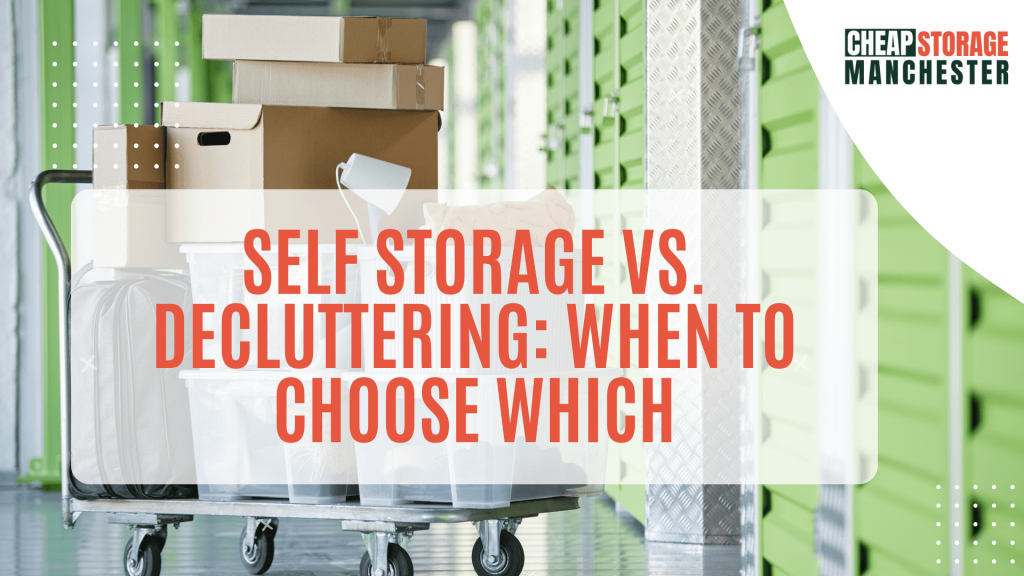
This guide explains Self storage vs decluttering in a practical way. You will learn when decluttering is the right first step, when self storage is the smarter option, and how to avoid paying to store things you do not actually want.
The goal is not a perfect home. It is a calmer environment that supports your wellbeing and is easy to maintain.
What decluttering is (and what it isn’t)
Decluttering is the process of reducing what you keep, so your home is easier to live in. It involves making decisions about what stays in your life and what leaves.
Decluttering is not:
- tidying (moving clutter into cupboards)
- organising without reducing anything
- throwing everything away in one weekend
Decluttering works best when you focus on categories that create daily stress, such as clothes, kitchen items, and visible surfaces.
For a structured approach, Decluttering in Manchester Storage is a useful companion resource.
What self storage is best for
Self storage is a space solution. It helps when you:
- want to keep items but do not need them daily
- need temporary space during a life change
- have a home that genuinely lacks storage capacity
Self storage is not a substitute for decision-making. It should reduce pressure, not hide the problem.
For household use, Home Storage in Manchester is the most relevant service page.
Self storage vs decluttering: the quickest decision framework
If you are unsure which to choose, use these questions.
Choose decluttering first if…
- you have a lot of duplicates and “just in case” items
- you cannot find things you already own
- your home has many low-value items taking up space
- you feel guilty or overwhelmed by the volume of stuff
Decluttering removes the noise. It usually improves your space without adding a monthly cost.
Choose self storage first if…
- you are mid-transition (moving, renovating, new baby, break-up)
- you need fast space relief but do not want rushed decisions
- you have bulky, seasonal, or valuable items you plan to keep
- your home is simply too small for your lifestyle (common in Manchester flats)
Storage buys you breathing space. It creates calm so you can declutter properly.
Choose both if…
- you have too much “everyday clutter” and too little storage space
- you need to clear a room but also reduce long-term volume
- you want a minimalist daily home while keeping certain items long-term
For many households, the best answer in the Self storage vs decluttering debate is: declutter first, then store what remains and is genuinely worth keeping.
The biggest mistake: storing things you should have decluttered
Storage becomes expensive clutter when it is used to avoid decisions.
Common “storage regret” items:
- clothes that do not fit and have not for years
- broken furniture you meant to repair
- outdated electronics
- hobby equipment you no longer use
- boxes you have not opened since your last move
Practical rule: if you would not pay to move it again, don’t store it
If the item is not worth the effort and cost to transport and store, it is likely not worth keeping.
A calm two-stage approach that works
If your environment feels mentally heavy, you want a plan that does not rely on willpower.
Stage 1: declutter what is clearly not needed
Start with “easy yes” categories:
- expired toiletries and cosmetics
- packaging and unused boxes
- broken items
- duplicates (mugs, containers, cables)
- old paperwork you do not need
This creates quick wins, which reduces stress and builds momentum.
Stage 2: store what you need, but not daily
Then decide what should leave the home temporarily or seasonally:
- off-season clothing and shoes
- holiday decorations
- bulky sports gear
- spare furniture during a room change
- suitcases
For packing supplies, Free Packing Boxes in Manchester can help you keep the process clean and contained.
When decluttering is the better mental health move
Decluttering helps when the clutter is linked to decision fatigue and unfinished tasks. If your home contains lots of low-value items that create noise, decluttering will often provide the biggest relief.
Signs you need decluttering, not more space
- you have several half-full cupboards but still feel “stuffed”
- you buy replacements because you cannot find what you own
- your space feels busy even after tidying
- you have “doom piles” on chairs and tables
Practical action: clear one surface and one drawer
Choose:
- the kitchen worktop, plus
- the “random drawer”
This gives immediate relief without a full house reset.
When self storage is the better mental health move
Self storage helps when the clutter is caused by lack of capacity, not poor habits. Many Manchester homes, especially city centre flats, are simply not built for bulky items.
Signs you need storage, not more decluttering
- you have already reduced belongings but still lack space
- items you use seasonally take over your wardrobe all year
- you cannot set up a functional nursery, office, or guest space
- large items block walkways or make rooms hard to use
Common storage-friendly categories
- seasonal clothes and shoes
- sports and hobby equipment
- pushchairs and baby gear you want to keep
- furniture you are not ready to sell
- archive boxes and documents (where relevant)
If you are storing valuable items and want reassurance, Safe and Secure Storage in Manchester is relevant.
If flexible access matters, Storage Open 7 Days a Week in Manchester can help you plan.
Cost and practicality: how to compare storage options sensibly
If you are considering self storage, start with realistic price and terms information rather than guesswork.
Useful pages:
If deposit is a barrier:
If you are considering storage during a move:
If you need help with transport:
For practical questions, use:
How to use storage without losing control
If you decide storage is right, the difference between “useful storage” and “hidden clutter” is a system.
Label everything for retrieval
Label format:
- category + contents + date packed
Example:
- “Winter coats and boots – packed Oct 2026”
- “Baby gear (0–6 months) – packed Jan 2026”
Keep a simple inventory list
Use your Notes app:
- Unit: Box 1 winter clothes, Box 2 decorations, Box 3 documents
Set a review date
If you do not set a date, storage becomes indefinite.
Use:
- 3 months for temporary transitions
- 6–12 months for seasonal rotation
Store only what you intend to keep
If you are unsure about an item, put it in a “decision box” and review it by a fixed date. Do not store “maybe” items forever.
Quick scenarios: what to choose and why
Scenario 1: “My flat feels crowded, but I have lots of duplicates”
Start with decluttering. Storage should come after you reduce low-value volume.
Scenario 2: “I’m converting a room into a nursery or home office”
Use storage first to clear space quickly, then declutter once the room is functional.
Scenario 3: “I want a minimalist home but I love seasonal hobbies”
Use both: declutter unused gear, then store seasonal equipment off-site.
Scenario 4: “I’m moving and everything feels chaotic”
Use storage to create breathing space and reduce pressure. Then declutter as you unpack.
These are common cases where Self storage vs decluttering becomes much clearer.
Bullet summary: when to choose decluttering vs self storage
- Choose decluttering when clutter is driven by duplicates, “just in case” items, and low-value volume
- Choose self storage when your home lacks capacity for seasonal, bulky, or valuable items you want to keep
- Use both when you need immediate space relief and a long-term reduction in daily clutter
- Avoid storing items you do not genuinely want; storage should not be paid avoidance
- If you use storage, label, inventory, and set a review date to stay in control
Short summary
Self storage vs decluttering is not an either-or choice. Decluttering reduces low-value volume and decision fatigue. Self storage solves genuine space constraints and helps during transitions when you need fast relief without rushed decisions. For most Manchester households, the best approach is to declutter the obvious “no” items first, then store seasonal or bulky belongings with clear labels and a review date so your home stays calm and manageable long-term.
If you want help choosing a storage option in Manchester
These pages can help you plan next steps: